
TCS was the top loser in the Sensex pack, falling over 3 per cent, followed by Titan, ICICI Bank, SBI, ITC and Bharti Airtel. On the other hand, Sun Pharma, NTPC, IndusInd Bank and Bajaj Finance were among the top gainers.

Asian Paints was the top laggard in the Sensex pack, falling around 5 per cent, followed by Bajaj Finance, HDFC, IndusInd Bank, Axis Bank and Kotak Bank. On the other hand, Tech Mahindra, Sun Pharma, Bharti Airtel and HCL Tech were among the gainers.
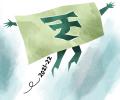
The economy is gaining traction with gradual pick up in manufacturing activity and moderation in contraction of services, spurred by comfortable liquidity conditions, an RBI article on Tuesday said. Observing that the retreat of the second wave of coronavirus pandemic has been slow, the RBI in an article on the 'State of Economy' said, the aggregate demand conditions are buoyed by the release of pent-up demand post unlock, while the supply situation is improving with the monsoon catching up to its normal levels and sowing activity gaining pace. "Reaffirming the traction that the economy is gaining, the manufacturing activity is gradually turning around, while contraction in services has moderated.
PowerGrid was the top laggard in the Sensex pack, shedding over 2 per cent, followed by HCL Tech, ONGC, M&M, Axis Bank, TCS, Reliance Industries and Infosys. On the other hand, Asian Paints, Titan, Tata Steel, Bajaj Finance and Bajaj Auto were among the gainers.

The S&P BSE Sensex shed 286 points to close at 24,539 and the Nifty50 lost 100 points to end at 7,456.
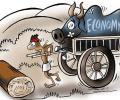
Economic growth has slipped to a six-year low of 5 per cent for the June quarter and is expected to turn in lower than that in the September quarter. Lack of consumption is seen as one of the key factors pulling down growth.

Dealers attributed the rupee's fall to increased demand for the US currency from importers.

Top Sensex gainers include Hero MotoCorp, Bajaj Auto, Asian Paints, IndusInd Bank, HUL, and Maruti, rallying up to 5.87 per cent. While, ICICI Bank, NTPC and ITC slipped up to 0.13 per cent.

ICICI Bank was the top laggard in the Sensex pack, cracking over 5 per cent, followed by Kotak Bank, HUL, HDFC, IndusInd Bank, HDFC Bank and Nestle India. On the other hand, Hero MotoCorp, Bajaj Auto, Maruti, TCS and HCL Tech were among the gainers.

The NSE Nifty touched a high of 5,077, and then tumbled to a low of 4,973, down 104 points from the day's high. The index finally settled with a loss of 42 points at 4,986.

The benchmark BSE Sensex ended down 2.23 per cent. The Bank Nifty fell 3.59 per cent.

BSE Realty index surged by almost 2%.

The Reserve Bank's rate-setting panel, Monetary Policy Committee (MPC), began its three-day deliberations on Wednesday amid expectations of a status quo on benchmark rate mainly on account of uncertainty over the impact of the second wave of COVID-19 pandemic. Moreover, the fears of firming inflation may also refrain the MPC from tinkering with the interest rate in its bi-monthly monetary policy outcome to be announced on Friday. The RBI had kept key interest rates unchanged at the last MPC meeting held in April.

The NSE Nifty ended at 3,625, down 37 points. Out of 2,612 stocks traded, 1,310 declined and 1,204 advanced.

Bharti Airtel was the top laggard in the Sensex pack, shedding over 2 per cent, followed by Sun Pharma, ITC, SBI, Axis Bank, HDFC twins and Nestle India.

The sale will be quicker if an Indian private bank buys it; it will take longer for regulatory clearances if a foreign bank or an NBFC buys it, points out Tamal Bandyopadhyay.
With the companies across sectors showing signs of weaknesses, global financial major Citi on Thursday said India's economic growth rate would slow to 6.8 per cent in the current fiscal even if the Reserve Bank of India cuts rates.

Yes Bank led the laggard's list on the Sensex with a nearly 10 per cent drop after Moody's Investors Service downgraded the private sector lender's ratings. Other top losers were SBI, IndusInd Bank, Tata Motors, Mahindra and Mahindra and HDFC.
Volatility in lending and deposit rates witnessed during the year is expected to end in 2009 with interest rates seen to be going down, due primarily to an easy monetary stance being pursued by the Reserve Bank of India to push growth.

HDFC Bank was the top loser in the Sensex pack, shedding over 2 per cent, followed by Kotak Bank, Bajaj Finserv, Maruti, Titan, SBI, HUL, HDFC and Tata Steel. On the other hand, Bharti Airtel, M&M, NTPC, Tech Mahindra, Sun Pharma and PowerGrid were among the gainers.

Analysts at foreign brokerage Bank of America Merrill Lynch said the RBI will cut rates by 0.25 per cent in December, and follow it up with a 0.15 per cent in February.

Bajaj Finance was the top laggard in the Sensex pack, dropping over 9 per cent, followed by Axis Bank, IndusInd Bank, HDFC, ICICI Bank and M&M. Reliance Industries, however, capped the losses by rallying over 3 per cent. Sun Pharma, Hero MotoCorp, L&T, PowerGrid and Bajaj Auto were also among the gainers.

Nifty50 surged 145 points to close at 8,468 after hitting an intra-day high of 8,475.

L&T was the top gainer in the Sensex pack, spurting over 6 per cent, followed by Hero MotoCorp, HDFC Bank, IndusInd Bank, Maruti, HDFC and HCL Tech. On the other hand, ITC, SBI and Bharti Airtel ended in the red.

If a salaried employee does not possess Form 16, he can still file the I-T Return with the help of his salary slips and Form 26 AS.
In the Sensex kitty, Ultratech Cement was the top gainer, rising 2.10 per cent, followed by HDFC Bank, Reliance Industries Sun Pharma, NTPC and Asian Paints.

Moody's said fiscal measures undertaken by the government -- such as corporate tax rate cuts, bank recapitalisation, infrastructure spending plans, support for the auto sector and others -- do not directly address widespread weakness in consumption demand, which has been the chief driver of the economy. In addition, interest rate cuts by the Reserve Bank of India are not being adequately transmitted to lending rates because of the credit squeeze caused by disruption in the non-bank financial sector, it said.

Here are Sukanya Verma's favourite female performances of 2021.

Rating agency ICRA on Wednesday revised down its credit growth outlook for banks to 2-3 per cent for the current fiscal, and said the coronavirus pandemic-driven stress may leave 3.1-3.7 per cent of assets into bad loan list by March.

Dr Reddy's was the top gainer in the Sensex pack, rising over 3 per cent, followed by PowerGrid, TCS, HCL Tech, Infosys and Reliance Industries. On the other hand, L&T, IndusInd Bank, Bajaj Finserv and Bharti Airtel were among the laggards.

'One evening, my mother announced during dinner that we would open a Cumulative Time Deposit account in the post office. 'My father froze. 'The handful of curd rice that he had just put into his mouth remained there for a few extra seconds.' Colonel K Thammayya Udupa (retd) recalls an important decision that changed his family's life forever.
The NSE Nifty ended at 3,039, down 39 points. The market breadth was marginally positive - out of 2,616 stocks traded, 1,275 advanced, 1,258 declined and the rest were unchanged on Monday.

The country's credit card population fell to 18.3 million as of end-March from a peak base of 28.3 million in April 2008.

Nestle India was the top gainer in the Sensex pack, rising 3.23 per cent, followed by Kotak Bank, HUL, Bharti Airtel, RIL, TCS, PowerGrid and Titan.
IndusInd Bank was the biggest gainer in the Sensex pack, rallying 4.84 per cent, followed by Sun Pharma, Bajaj Auto, Bharti Airtel, Coal India, Tata Motors, SBI, ICICI Bank, Hero MotoCorp, ONGC, HDFC, Vedanta, L&T, Kotak Bank, Maruti and Axis Bank, ending up to 2.92 per cent higher.

World Bank lowered its global economic growth outlook for 2016 to 2.9% from 3.3% earlier.

Indian team's head coach Ravi Shastri gave the young wicketkeeper-batsman tips to work on specific skill sets ahead of the 11th edition of Indian Premier League.

The government's fiscal deficit may exceed the target of 4.8 per cent of GDP by 0.50 percentage points in this financial year, and money-guzzling measures like decision to push the Food Security Bill are only expected to complicate the matter.

Tata Steel and Axis Bank were among the top gainers in the Sensex pack, surging up to 6.67 per cent following their March quarter results.

Charles Leclerc overcame a late throttle scare to win the Austrian Grand Prix for Ferrari on Sunday and become Formula One championship leader Max Verstappen's closest rival.
